Share on Wechat:
With rapid social development and continuous advancement of the times, the traditional manufacturing model can no longer meet current market demands, and intelligent manufacturing has emerged as the solution. Countries across the globe are attaching growing importance to the planning and construction of smart factories. Marking the starting point of enterprises' digital and intelligent transformation, smart factory planning clarifies development goals, designs operational models, outlines overall blueprints and defines implementation roadmaps. This article elaborates on ten key priorities for smart factory planning.
Smart Factory Consultation and Diagnosis
Two national standards were issued in 2021: Intelligent Manufacturing Maturity Model (GB/T 39116-2020) and Assessment Method for Intelligent Manufacturing Maturity (GB/T 39117-2020).
The standards classify enterprises' intelligent manufacturing maturity into five levels:
Level 1 (Planning Level), Level 2 (Standardized Level), Level 3 (Integrated Level), Level 4 (Optimized Level), Level 5 (Leading Level).
Assessments are carried out covering 5 capability elements, 12 capability domains and 20 sub-capability domains. Corresponding assessment criteria and scoring standards ranging from Level 1 to Level 5 are specified for each sub-domain. Enterprises can match their construction status with the tiered requirements and obtain objective evaluation scores. Separate specifications are provided for process industries and discrete manufacturing industries. All enterprises may conduct self-assessment with reference to this system.

Enterprise Diagnosis and Evaluation Model
This maturity assessment method is applicable to most enterprises yet relatively general. If enterprises require refined assessment and targeted diagnosis, they may contact Huagong Saibai to conduct in-depth evaluations covering business management status, digital systems, automated applications and other dimensions. Huagong Saibai has carried out transformation consultation and diagnosis services since 2019. Up to now, it has provided intelligent transformation consultation and diagnosis for nearly 300 enterprises in Wuhan, and delivered successful digital transformation projects for multiple leading local industrial enterprises including Wuchuan Heavy Industry, No.1 Metallurgical Steel Structure, Hubei Changjiang Electric and Cargill Biotech. It empowers the manufacturing industry with new-generation automation, informatization, digital and intelligent technologies as well as new processes to cut costs, boost efficiency and improve product quality, thereby fostering new manufacturing models.
Design of Smart Factory Workshop
The plant design of smart factories needs to adopt the concept of digital twins and utilize 3D design software for architectural design, especially the layout of pipelines for water supply, power supply, gas supply, network, communication and other utilities. Meanwhile, smart factory buildings require the planning of intelligent video surveillance systems, intelligent daylighting and lighting systems, ventilation and air conditioning systems, intelligent security alarm systems, intelligent access control card all-in-one systems, intelligent fire alarm systems and more. When deploying an intelligent video surveillance system, facial recognition technology and other image processing technologies can be leveraged to filter out useless or interfering information in video footage, automatically identify various objects and personnel, analyze and extract key valuable information from video sources, judge abnormal situations in monitoring screens, and trigger alarms or other actions in the fastest and most appropriate manner.

Workshop Layout of an Intelligent Factory of a Certain Industrial Enterprise
The work zones throughout the factory plant (including processing, assembly, inspection, incoming goods, outgoing goods, warehousing, etc.) shall be analyzed in accordance with the principles of industrial engineering. Digital manufacturing simulation software may be adopted to simulate equipment layout, production line arrangement and workshop logistics. During the factory building design, considerations should also be given to issues such as noise reduction, flexible readjustment of equipment layout, and logistics transportation for multi-story factory buildings.
Intelligent Production Line Planning
Intelligent production lines are the core component of smart factory planning. Enterprises need to rationally design intelligent production lines using tools such as value stream mapping based on the products to be manufactured, production capacity and takt time of the production lines. The characteristics of intelligent production lines are as follows: during production and assembly, they can automatically collect data including production output, quality, energy consumption and Overall Equipment Effectiveness (OEE) via sensors, numerical control systems or RFID; display real-time production status on electronic kanban boards to prevent operational errors and mistakes; enable coordination between working procedures through Andon systems; support rapid die changeover to achieve flexible automation; facilitate mixed-flow production and assembly of multiple similar products, allow flexible process adjustments and adapt to the production mode of small-batch and multi-variety manufacturing; possess certain redundancy, meaning production tasks can be shifted to alternative equipment when breakdowns occur on the line; provide intelligent prompts for manual workstations and make full use of human-machine collaboration.
Designing an intelligent production line requires considerations of space saving, reduction of operator movement and implementation of automatic inspection, so as to boost production efficiency and product quality. Labor minimization is a key priority for enterprises constructing new factories, which necessitates analyzing which workstations can deploy automated equipment and robots, and which ones rely on manual labor. Automated equipment should be adopted for workstations featuring highly repetitive and low-variation tasks, while manual stations are suitable for the opposite scenarios.
Lean Production Management
The core philosophy of lean production is to eliminate all waste and ensure workers collaborate in the most efficient manner. Many manufacturing enterprises adopt make-to-order or engineer-to-order production to accommodate the production model of small batches and diverse product varieties. Smart factories need to realize just-in-time delivery of components and raw materials, produce finished and semi-finished products in a timely manner in accordance with order delivery deadlines, set up electronic kanban boards on production sites, organize production via pull systems, and deploy Andon systems to promptly identify and resolve abnormalities arising during production. Meanwhile, visual management and quick die change are promoted. Numerous enterprises have implemented U-shaped production and assembly lines and established intelligent manufacturing cells. Promoting lean production is a long-term continuous improvement process that must be closely integrated with the advancement of informatization and automation.
Intelligent Logistics Planning
Promoting the construction of smart factories relies heavily on intelligent logistics at production sites, especially for discrete manufacturing enterprises. When planning a smart factory, efforts should be made to minimize unnecessary material handling. Many leading manufacturers have set up centralized picking zones in assembly workshops. Goods are consolidated based on individual customer orders, and rapid picking is implemented via the DPS (Digital Picking System) to deliver materials directly to assembly lines, eliminating line-side warehouses.

Planning of Central Sorting Area in Blanking Workshop
Discrete manufacturing enterprises can transfer materials between two mechanical processes through rail-mounted industrial robots, gantry manipulators and other equipment. Material transportation can also be realized by means of AGVs, RGVs (rail-guided vehicles) or overhead conveyor chains. On the workshop site, production buffer zones shall be set up according to the capacity gap between the preceding and subsequent processes. The application of automated high-rise warehouses and roller conveyor systems is also an issue requiring systematic analysis when enterprises plan smart factories.
Informatization Planning
Enterprise informatization planning aims to rationalize business management procedures, thereby helping enterprises enhance their rapid response capabilities; it also facilitates the rational and efficient utilization of corporate resources, enabling optimal resource utilization under existing conditions to maximize economic benefits.
Formulating enterprise informatization planning requires a holistic perspective to build an expandable, scalable and flexible basic collaborative architecture. This architecture addresses the demand for business integration in network environments and connects applications and diverse services via well-defined interfaces and protocols between such services.
Three tiers of platforms shall be designed to underpin the entire enterprise informatization system, namely the hardware support platform, software support platform and application system platform. The hardware support platform serves as the foundation of overall informatization, the software support platform underpins the operation of information systems, and the application system platform acts as the vehicle for enterprises to realize informatized management.
The application system platform shall deploy applications across four levels: the operation level, management level, decision-making level and presentation level. Applications deployed at all levels are ultimately integrated onto the enterprise informatization construction platform. By comprehensively applying modern management technologies and information technologies, the overall integration of internal corporate management, operation, decision-making and other dimensions can be achieved, fulfilling the objectives of enterprise informatization planning.
Data collection
During the production process, data such as output, quality, energy consumption, machining precision and equipment status shall be collected in a timely manner and associated with orders, working procedures and personnel to realize full-process traceability of production. Alarms can be triggered promptly once problems occur, enabling traceability to production batches, parts and raw material suppliers. In addition, the actual costs incurred during product manufacturing can be calculated. Some industries also require the collection of environmental data including temperature, humidity and air cleanliness.
Enterprises shall determine data collection methods based on required collection frequencies. Data requiring high-frequency collection shall be automatically retrieved from equipment control systems. When planning smart factories, enterprises shall predefine interface specifications for data collection and the application of SCADA (Supervisory Control and Data Acquisition) systems. Many manufacturers have developed data collection terminals that can be externally connected to machine tools to address data collection challenges for legacy equipment, from which enterprises can select appropriate models for deployment.
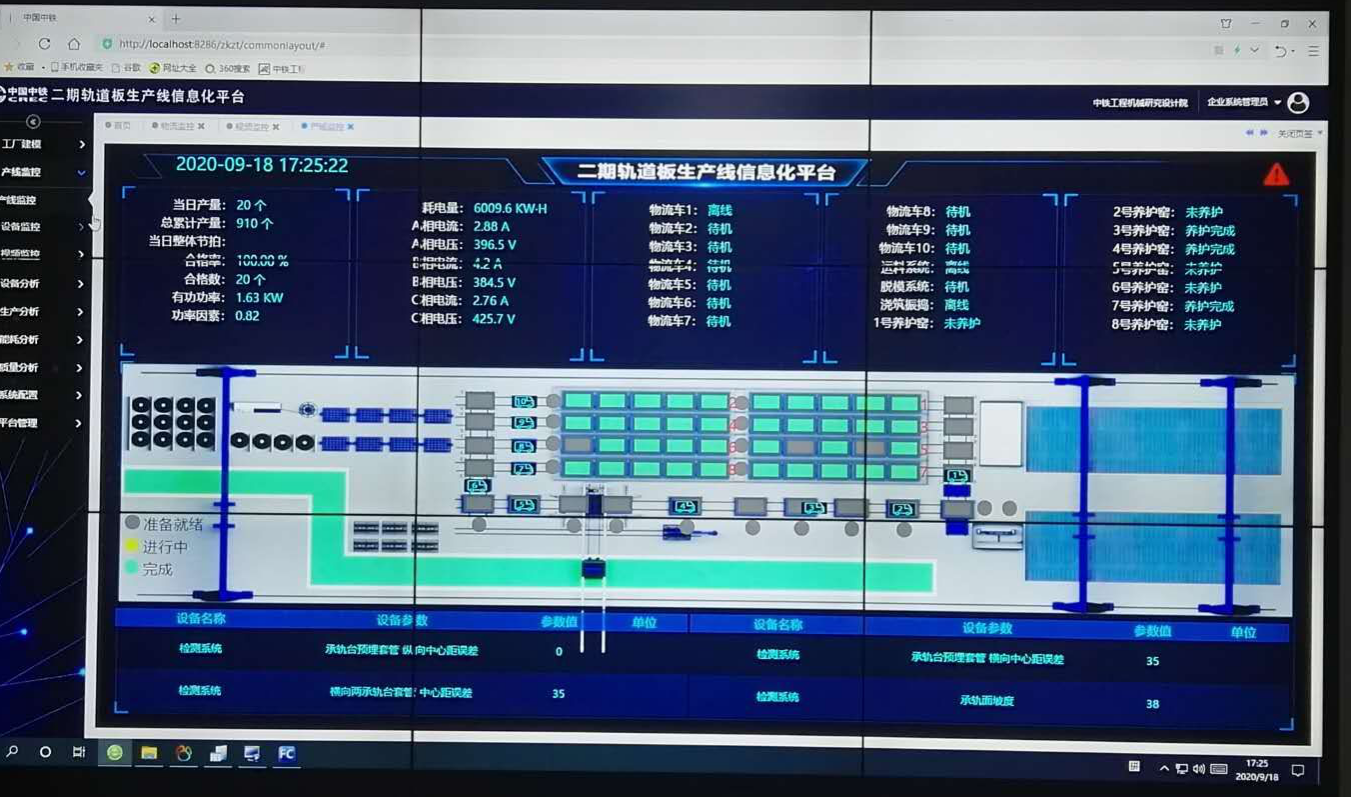
Accurately understand equipment status through data collection
Equipment Management
When manufacturing enterprises plan smart factories, they must pay close attention to the latest developments in intelligent equipment. Machine tools are evolving from numerical control to intelligence, enabling simultaneous measurement and machining, as well as compensation for errors caused by thermal deformation and tool wear. Enterprises have also begun to adopt turn-mill composite machining centers, and many manufacturers deploy industrial robots for material loading and unloading on equipment.

Equipment Management System
In factories of the future, metal additive manufacturing equipment will be integrated with cutting (subtractive manufacturing) and forming (isomorphic manufacturing) equipment, greatly boosting material utilization rates. Beyond six-axis industrial robots, the deployment of SCARA robots and parallel robots should also be taken into account. Collaborative robots will be deployed on production lines to work alongside human workers and improve operational efficiency.
Energy Management
To reduce the comprehensive energy consumption of smart factories and boost labor productivity, energy management is extremely essential, especially for factories with high energy consumption. By collecting energy consumption and operational data from energy monitoring points (power transformation and distribution, lighting, air conditioning, elevators, water supply and drainage, hot water units and key equipment), classified, itemized and zoned statistical analysis of energy consumption can be generated. This enables unified energy dispatching and optimized balance of energy media to achieve the goal of rationalizing energy utilization.
Meanwhile, real-time energy consumption data collected from key equipment can accurately reflect equipment operating status (shutdown, startup or processing), which allows automatic calculation of OEE. Sudden fluctuations in equipment energy consumption can also be detected to predict tool and equipment failures. In addition, enterprises may consider installing photovoltaic systems on factory rooftops to supply part of the energy demand.
Data Visualization
Data large screen is a popular data visualization tool nowadays. It visually displays key business indicators of factories, workshops, warehouses and laboratories on large screens. It not only enables production staff to quickly locate target data from massive complex business data, but also provides assistance for decision-makers. With the advent of the visualization era and the emergence of large-scale production, Huagong Saibai keeps upgrading the HG-BI Industrial Big Data Visualization Platform.
When it comes to data visualization, many people equate it with page design and think it is not difficult at all. This view may hold true if interpreted merely from a technical perspective, yet its greater value lies in the design of data dimensions — challenges here stem not from technical hurdles, but from business complexities. The core value hinges on whether the results of data analysis are actionable. The purpose of chart analysis is to make insights understandable to a wider audience, making the accuracy of analytical dimensions far more critical. Consequently, simple data presentation can no longer meet current demands. Data visualization requires comprehensive consideration across business, technical, interactive, artistic design, and algorithm perspectives.


 Telephone:13584851260
 Email:zhengyang@szweichi.com
 Address: No. 7 Beiguandu Road, Yuexi Town, Wuzhong District, Suzhou City, Jiangsu Province

 Official Website
